
Geography is the Best History Teacher
We’re nerds. I’ve said it before and I’ll say it again. We have a family of nerds. Sorry kids, but it is true. When our kids were with us in Jacksonville over Christmas, the conversation inevitably turned to a discussion about some random historical fact that someone learned while listening to a history podcast. We had a robust discussion about it for a bit, and then I said: “Does anyone else’s family have these type of discussions?” We also love geography. In fact when the kids were little we invented a family game called GO. Geography Obsessed. We had a home version and a travel version. The home version went something like this: Go into Dad’s office and look at the giant map on the wall. Find Azerbaijan. Now find Adelaide. Now find Addis Ababa. The travel version was used while we stood in line. These were in the days before you could stare at a cell phone to keep you entertained while waited. So instead we’d say: Name 5 major cities/countries that start with the letter A. GO! Nerds right? But these stories reflect our love of learning about history and cultures, particularly through the geography that shaped them. And we love that our kids have inherited that love.
Istanbul was fascinating to us on many levels. There has been a city here for 2500 years. It was founded by the Greeks as Constantinople. It became the Roman capital in 330 AD when the Western Roman Empire was falling. It was the center of the Orthodox Christian Church for over 1000 years. It fell to the Muslim Ottoman Empire in 1453 and didn’t become an independent country until after World War 1. In addition to a storied history, it is a city that spans two continents. The Old Town is in Europe. But across the Bosphorus Sea, a short ferry ride away lies Asia. We went to the Asia side during a food tour and can now say that Eric has officially been to Asia!!
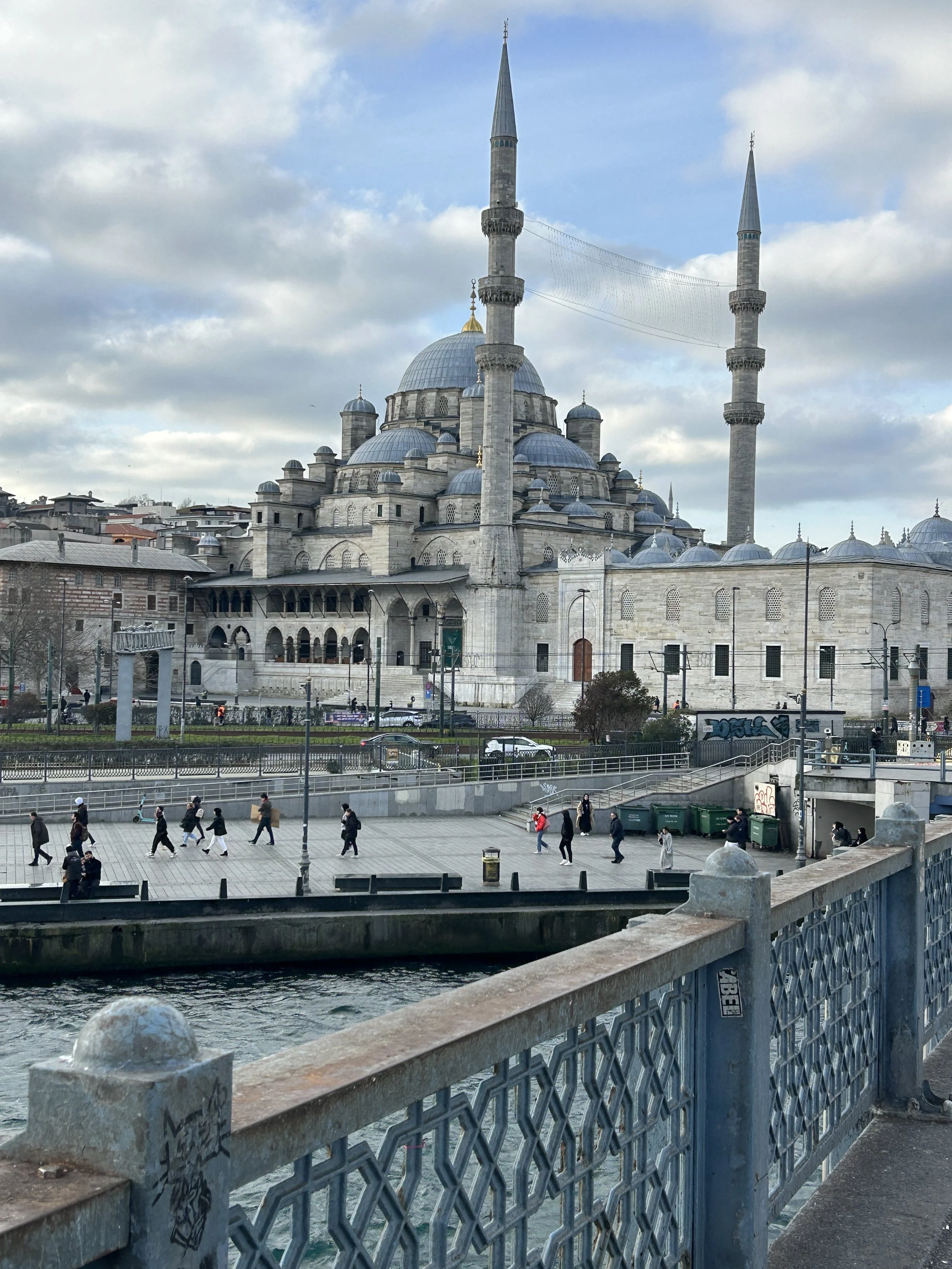
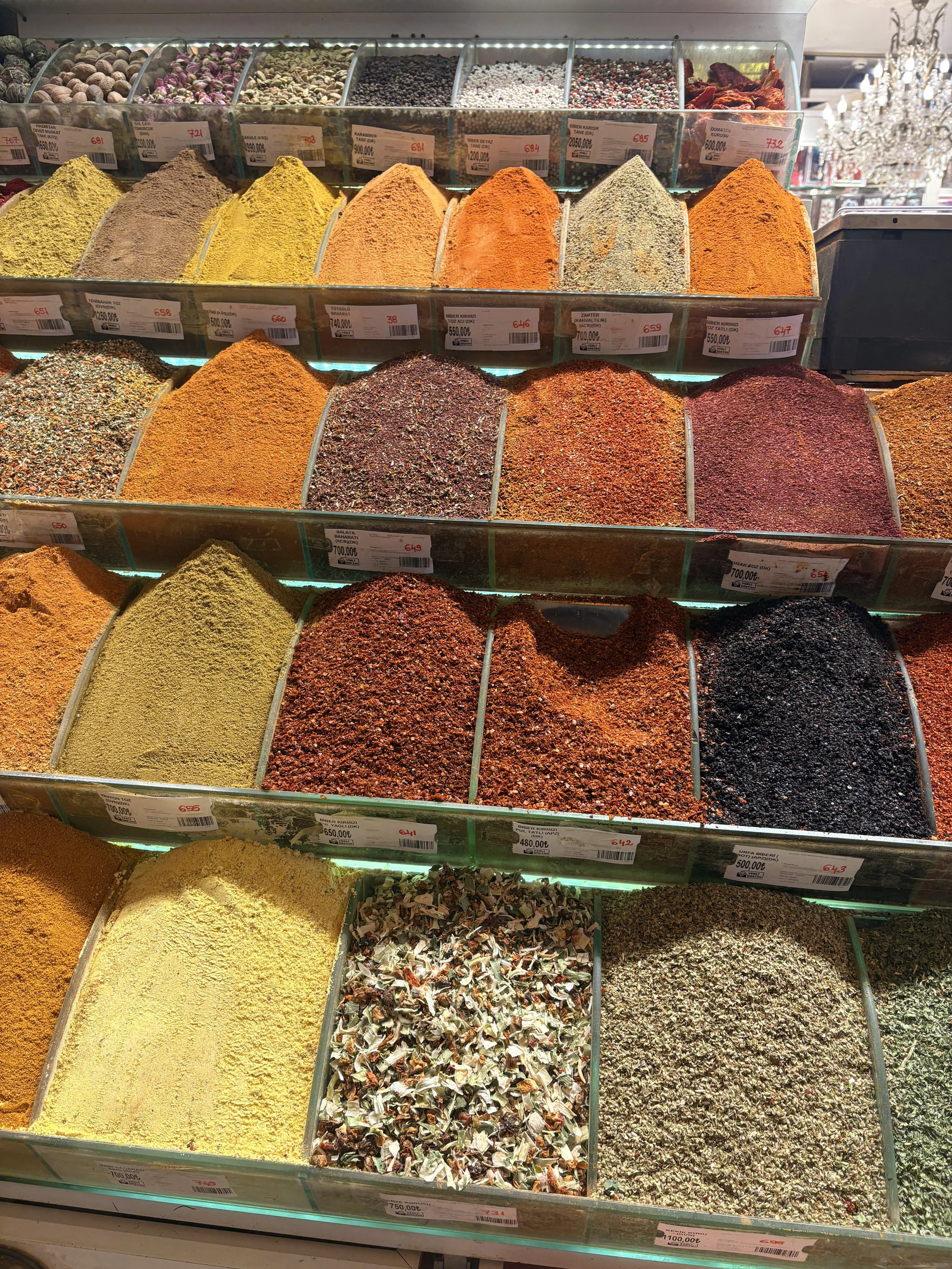
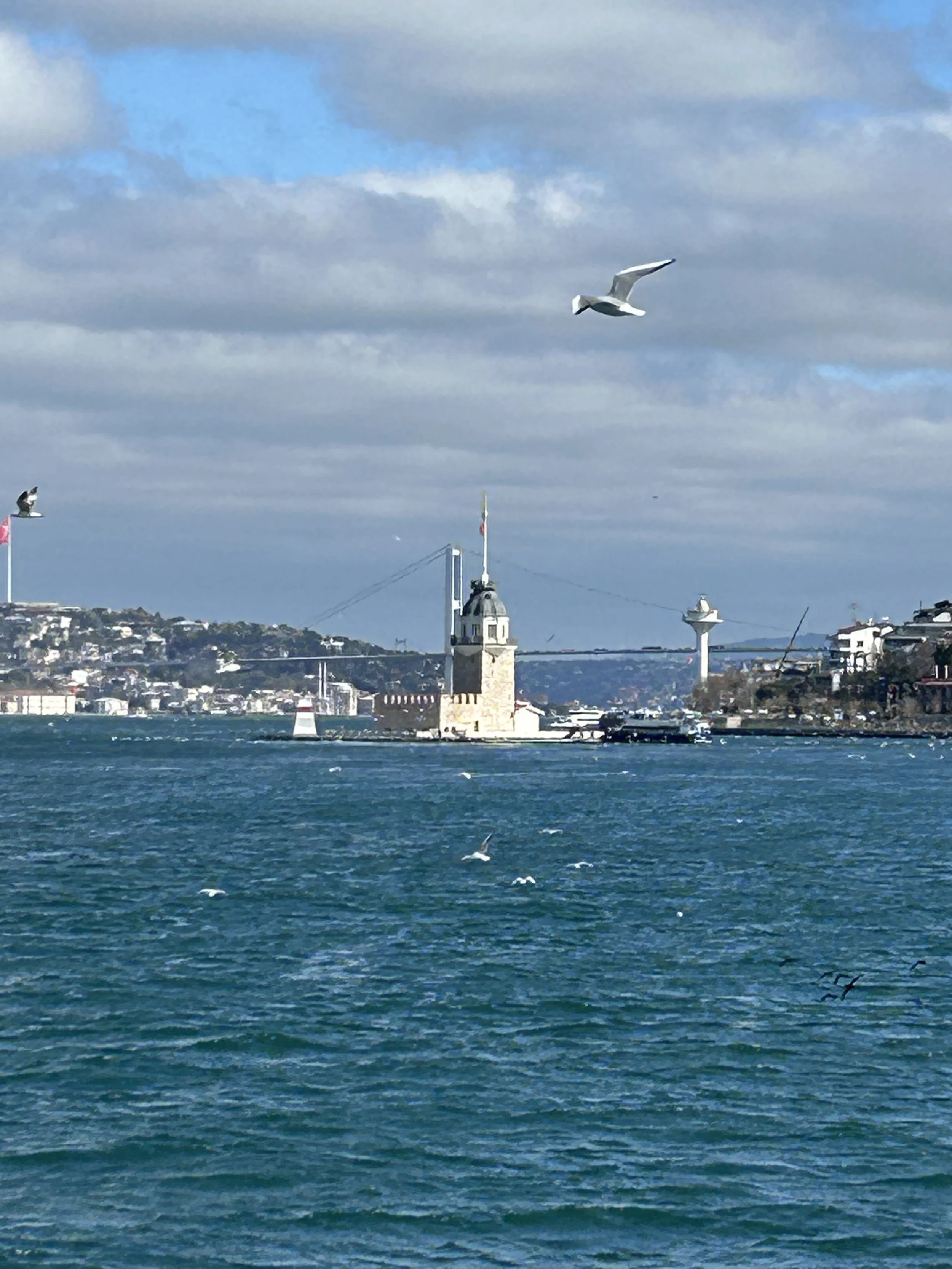
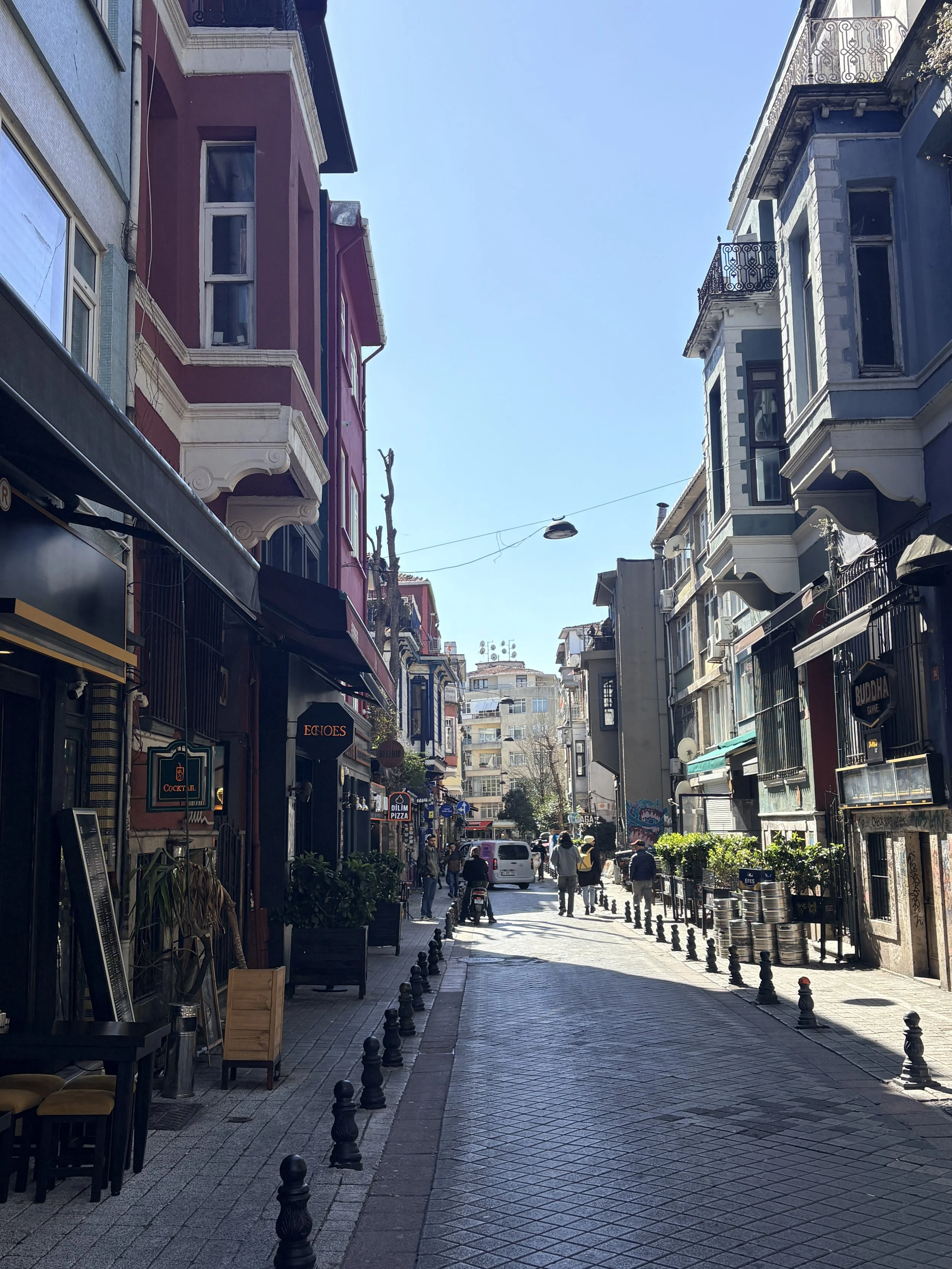
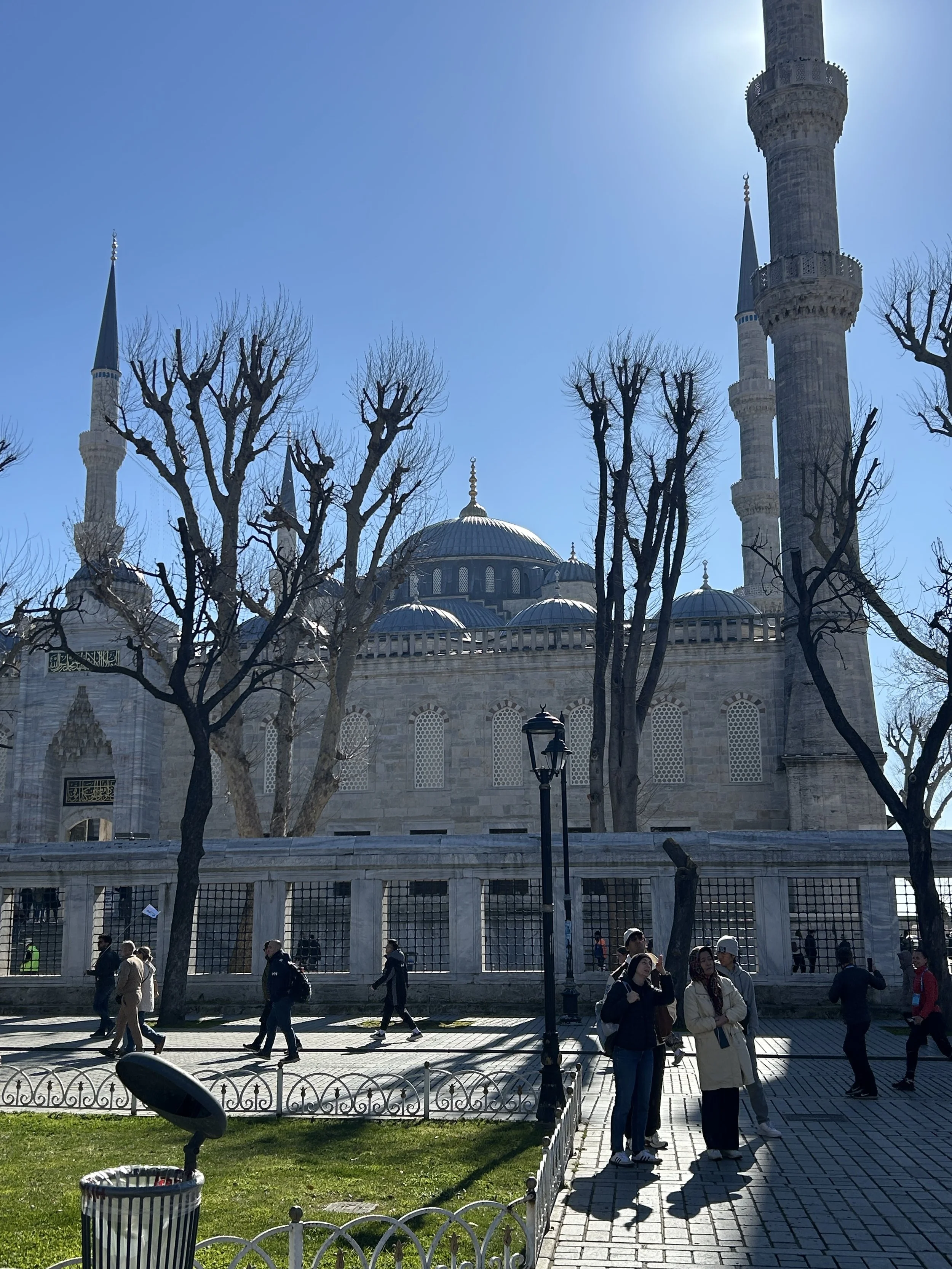
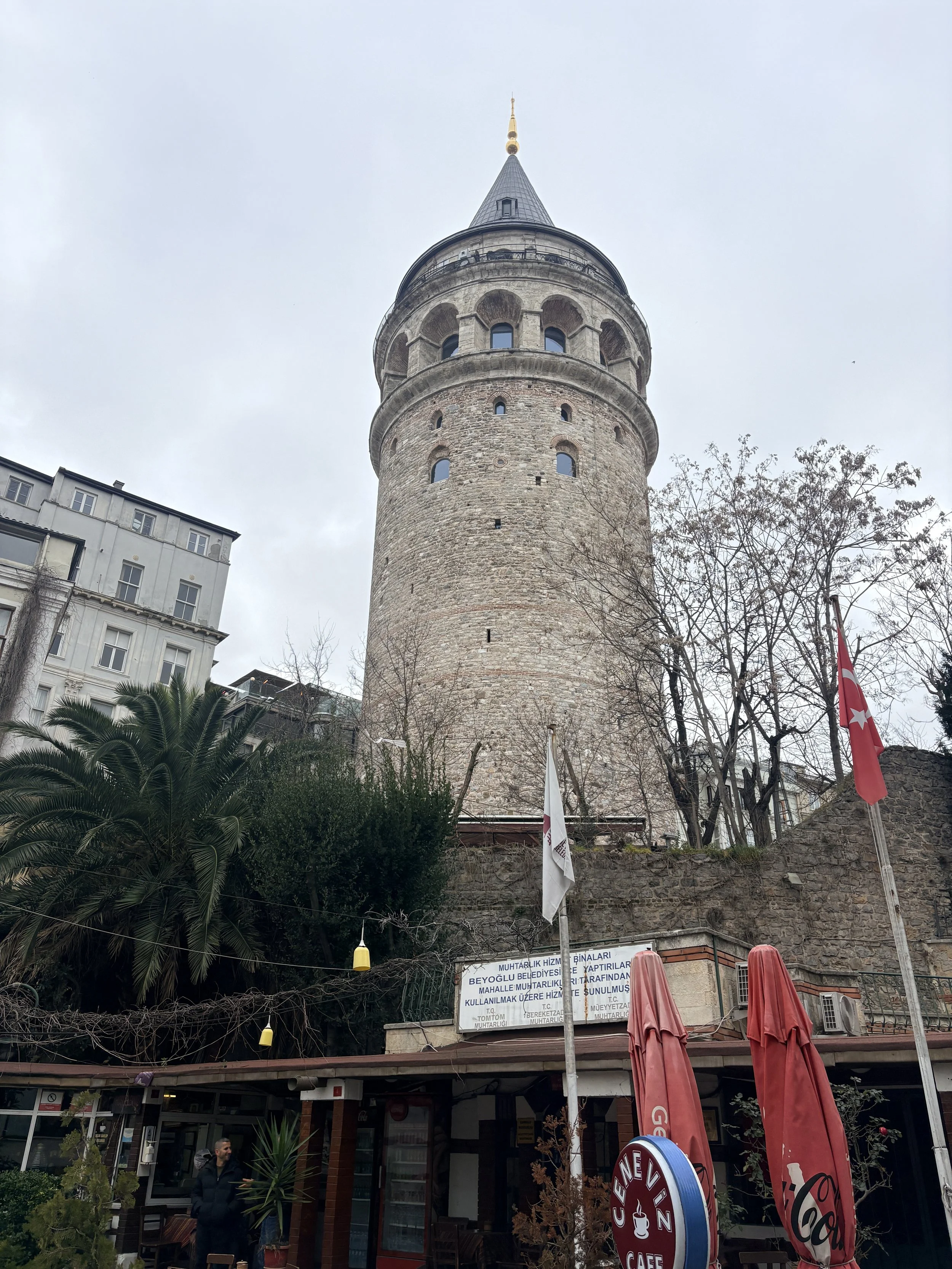
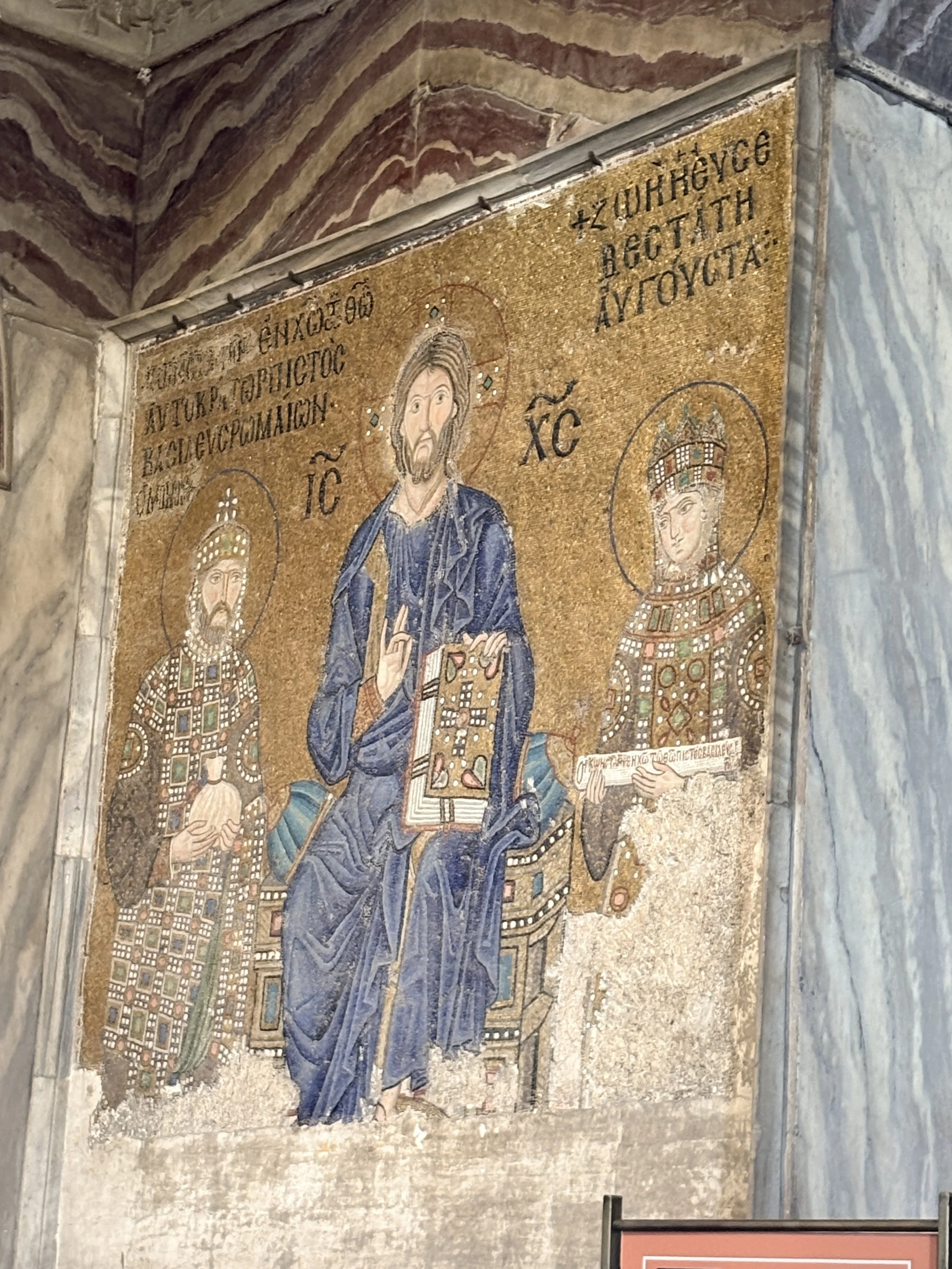
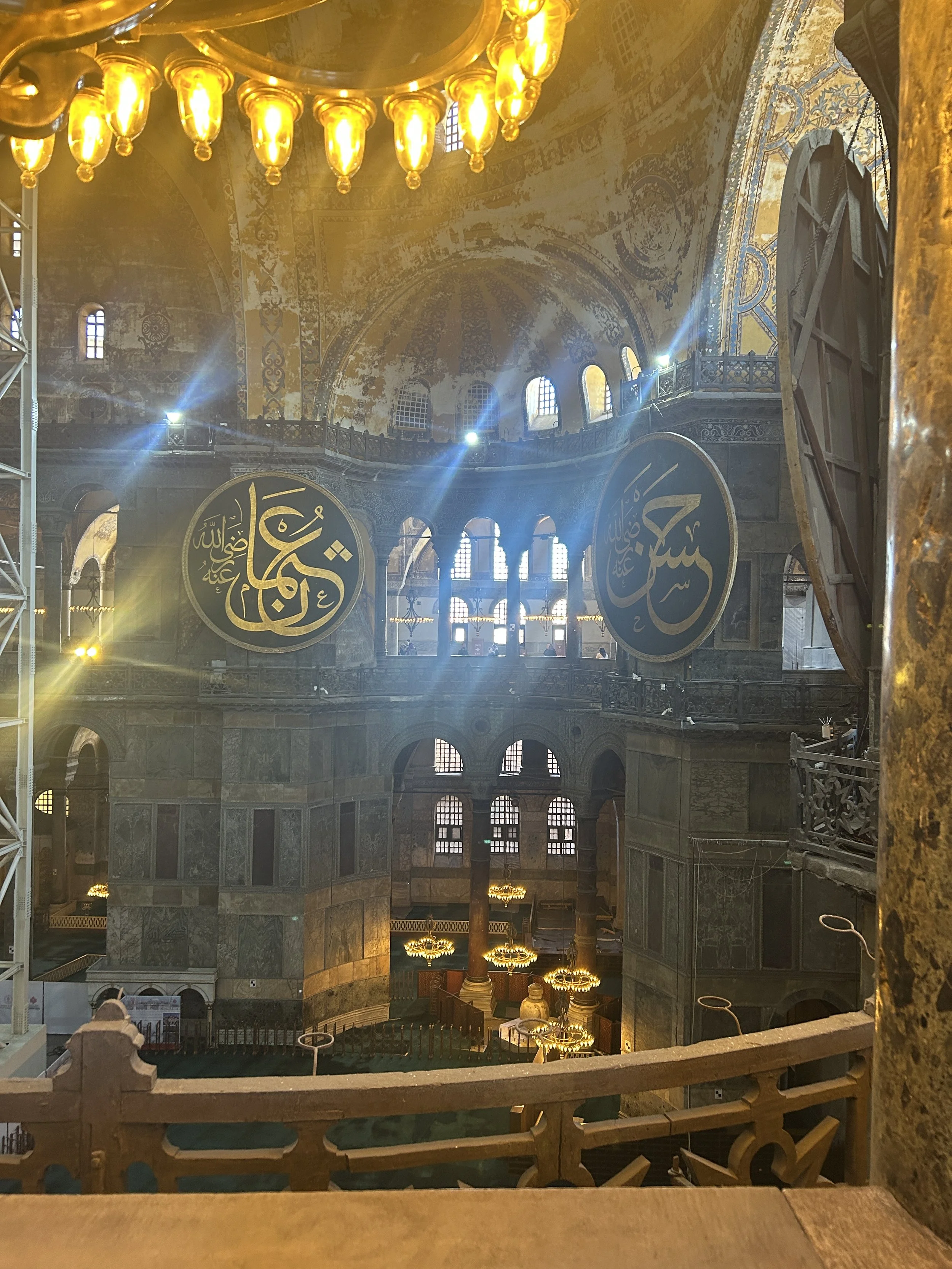
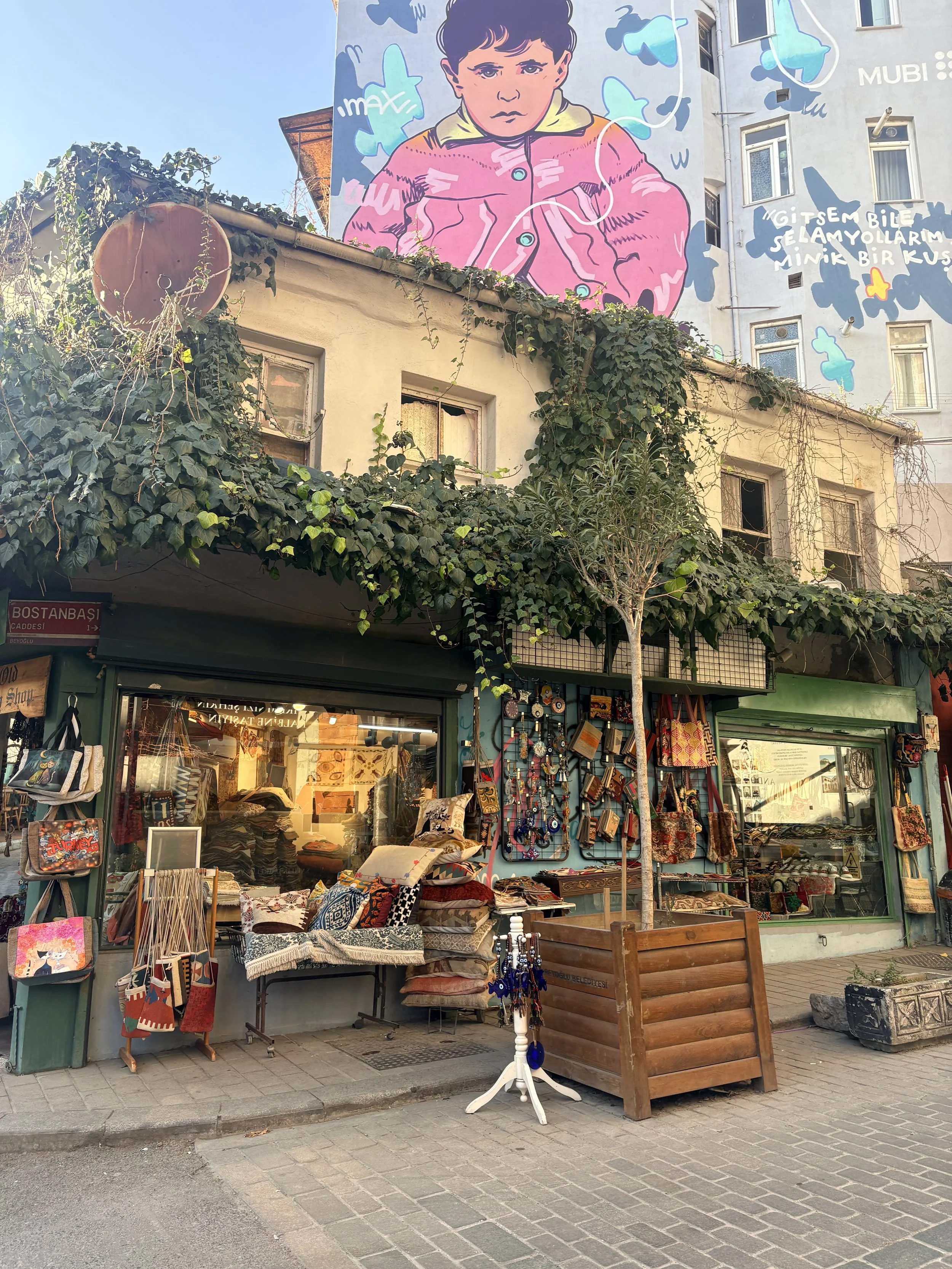
We found many sides to Istanbul. It was not at all what we expected. There are beautiful mosques that dot the city skyline, and there are calls to prayer throughout the day. But particularly in the tourist parts of both the Europe and Asia sides, most people are dressed in secular dress. There are bars everywhere. We were there during Ramadan and yet the cafes were still crowded during the day. And the long history of the Byzantine empire can still be seen in buildings like the Hagia Sophia, which was built in 532 AD as a church and is now a mosque. There you’ll find original Byzantine mosaics of Mary and Jesus alongside Islamic calligraphy.
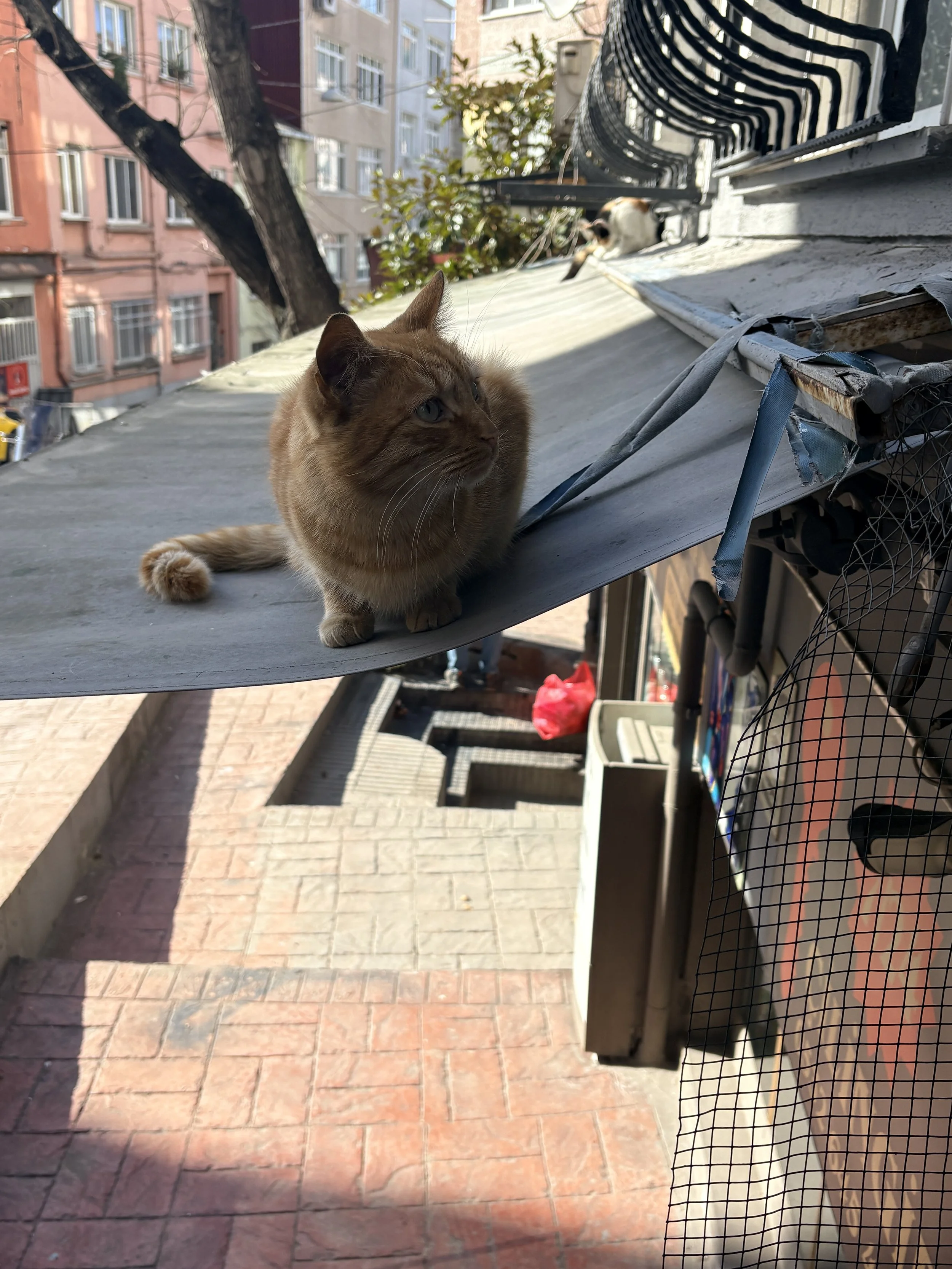
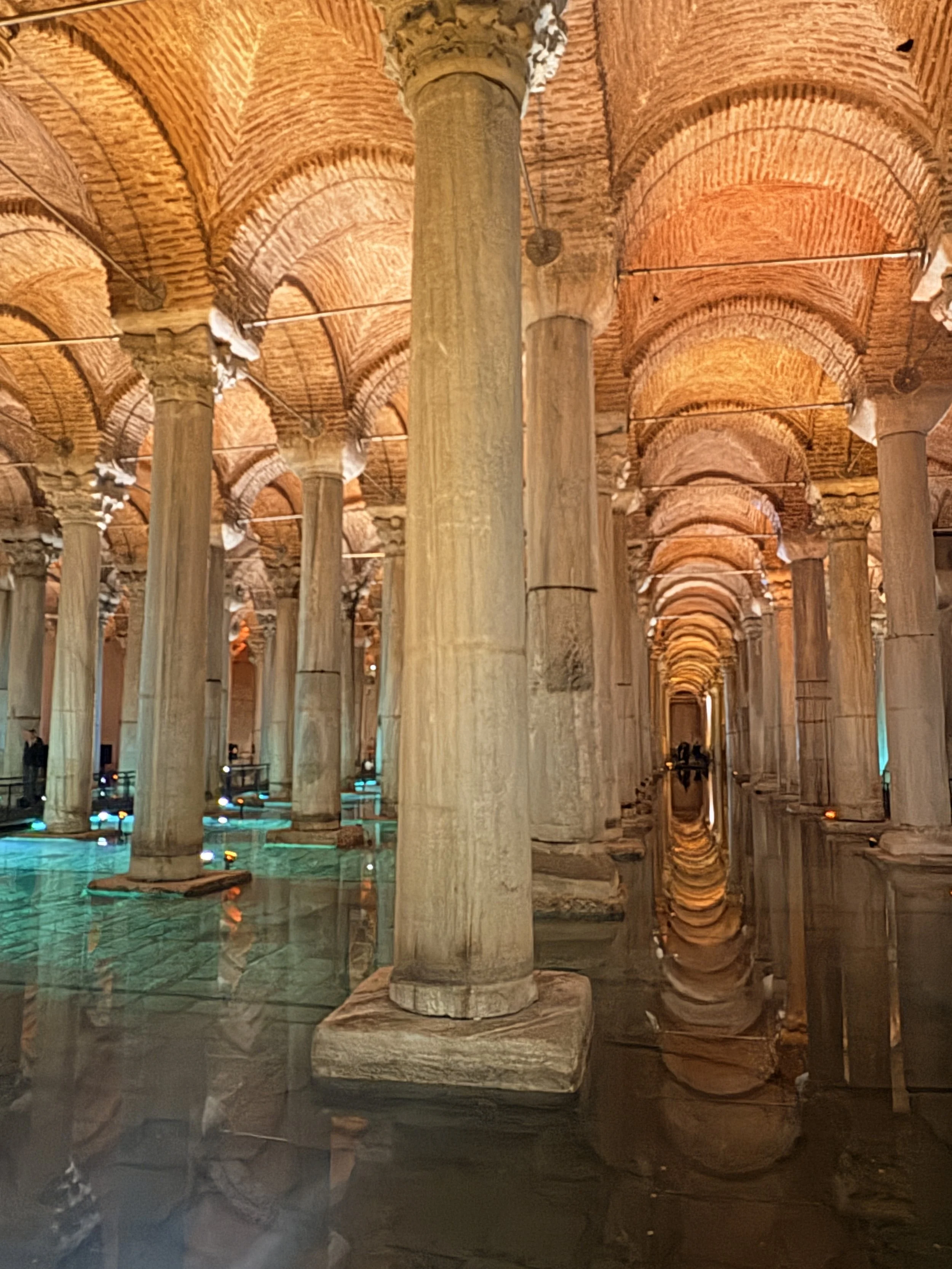
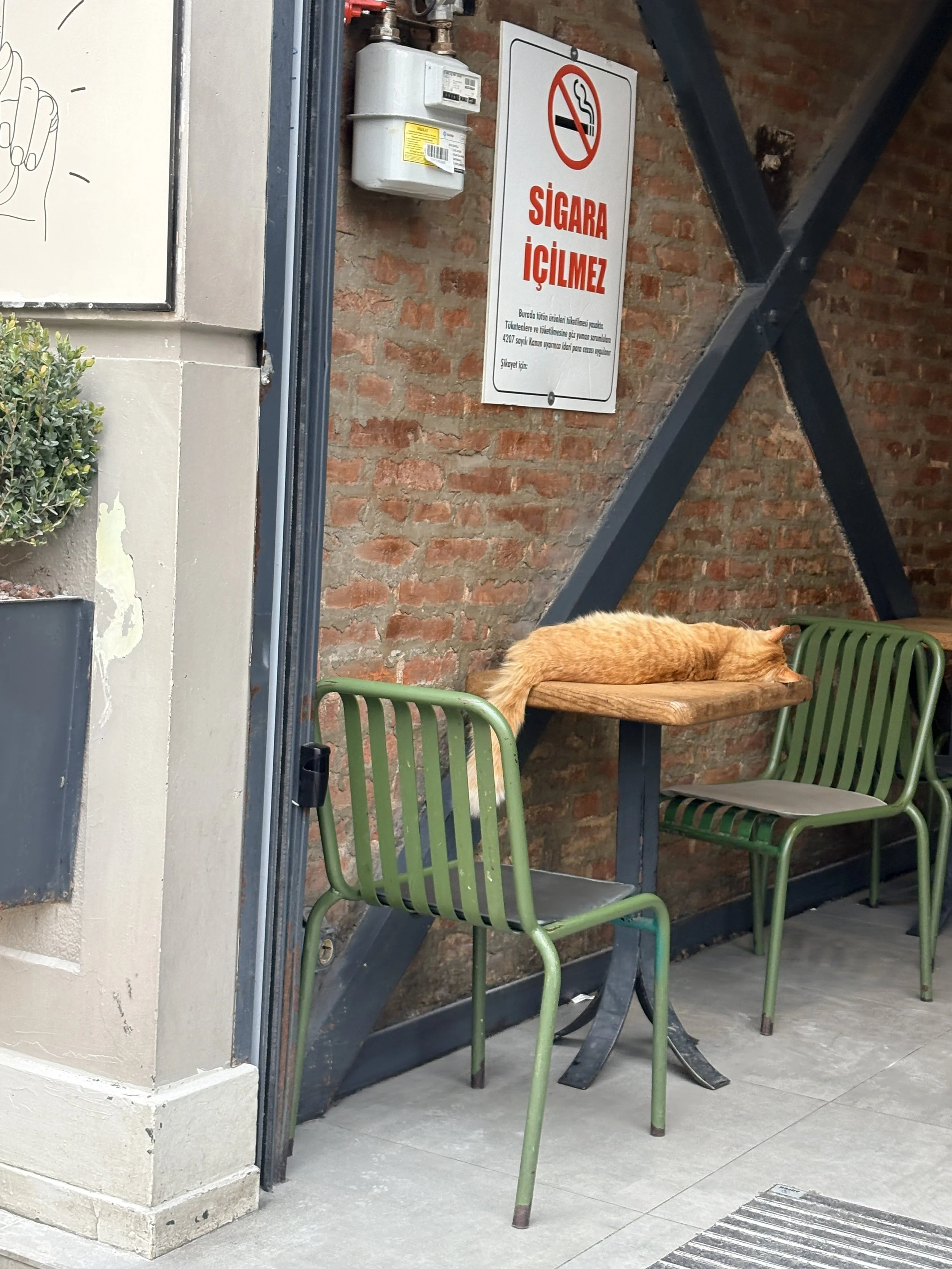
As we walked the streets and hills (oh the hills!) of Istanbul, I found myself wanting to learn more about this fascinating city. Like: why are there so many cats? How is this city SO big? (16M people!) We went to the Basillica Cistern, which was built as the water storage vault during the Byzantine Empire. You might recognize it from the Tom Hanks movie Inferno. As we exited the Cistern and returned to street level we realized we had been walking over it previously and not known it. What other worlds exist below the streets of Istanbul? Do the people who live here realize that they walk through history every day?
We’re now in Kotor, Montengro and have a whole new list of history to unpack. The Austro-Hungarian Empire. Yugoslavia. The wars of the 1990s that I know were tragic but don’t know enough about. And then on to Albania. Another country that I know nothing about. And then Athens and Crete. Even more ancient history, traditions, and culture.
Time to queue the podcasts. Nerds rule.